ENVIRONMENT
We are fully committed to playing our part in addressing climate change and promoting ocean biodiversity. We are determined to accelerate our transition toward net zero emissions greenhouse gas by 2050 from our marine operations. We work closely with leading technology companies, shipyards, and fuel providers to push the boundaries of what is possible.
Pathway to decarbonisation
We are on track to meet the IMO (International Maritime Organization) carbon intensity goal of a 40% reduction from 2008 levels ahead of the 2030 milestone. In 2023 we already achieved 37.8% reduction. Since decarbonizing marine operations is one of our main priorities our long term goal is to reach net zero greenhouse gas emissions for our fleet by 2050.
Pathway to decarbonisation
Improving Quality of Ships Emissions
Today, 15 of 22 MSC Cruises ships are equipped with Exhaust Gas Cleaning Systems (EGCS) to reduce sulphur from ship emissions by 98%.
Our hybrid EGCS can operate in an open or closed loop, allowing wash water to be collected in holding tanks to avoid direct discharge into ports or other sensitive areas.
6 of our ships are fitted with a selective catalytic reduction (SCR) system, which significantly reduces nitrogen oxides (NOx) from the ship exhaust and transforms it into harmless nitrogen and water, through advanced active emissions control technology. SCR systems will be on fitted on all future ships.
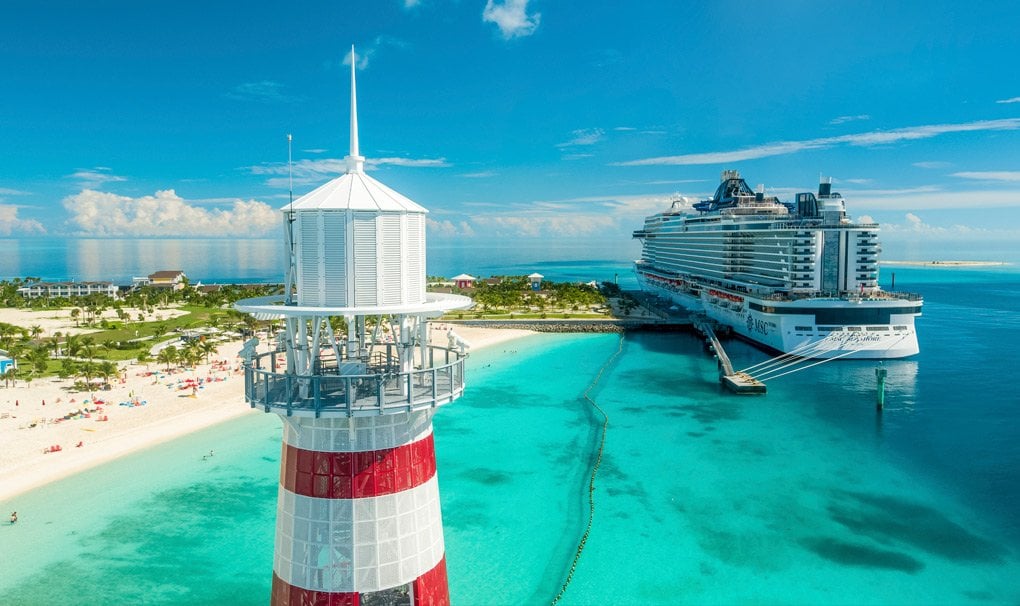
12 of our ships, including all our new ships, are been fitted with shore power capability. This enables onboard engines to be switched off, cutting emissions. We are committed to using these systems whenever shore power is available.
Improving Quality of Ships Emissions

Responsible waste management
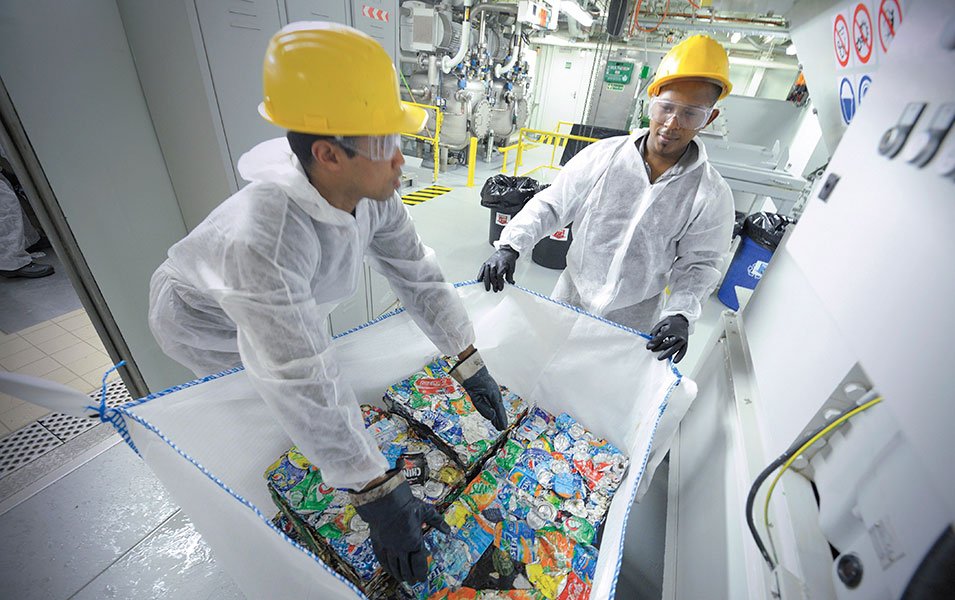
Our entire cruising fleet has achieved ISO 21070:2017 certification for marine environmental protection meaning that we manage waste in an environmentally responsible manner.
This certification proves that we are creating less waste than previously and have specific procedures in place to help us manage waste on our ships, including handling, collection,
separation, marking, treatment, and storage.
It also demonstrates that we have appropriate ship-to-shore interface for the delivery of waste from our ships to port reception facilities.
Responsible waste management